
What is a prison escape story, really?
If you have just finished reading both volumes of the Wanderer's Journal and have put yourself in the heist and/or prison escape mindset, this article might scratch that itch. This article has spoilers for both volumes of the Wanderer's Journal!
But what is a prison escape story, really? I argue that ultimately they are all just heists. This comparison of the two story types and their common beats should illustrate my argument:
| Heist | Prison escape |
|---|---|
| Show loot | Show prison |
| Impossible to break in | Impossible to break out |
| Show who is being robbed | Show sadistic guard / prisoner |
| Build team of experts | Make a desperate alliance |
| Explain convoluted plan | Form desperate plan |
| Plan fails | Plan fails |
| Improvise | Improvise |
| Victory or bust | Victory or bust |
| Tension through conflict | Tension through fear |
Certainly many elements here can be used to structure any plot ever, yet I argue prison escape stories are simply a subtype of a heist. The key difference is mainly in how the story feels: a heist is done from a reasonable place of comfort, with ample time, preparation, and freedom. An escape story features extreme distress, a sense of helplessness, and finding strength in the worst place imaginable. A heist often features a team that functions like a well-greased machine while a prison escape involves a dysfunctional desperate alliance where trust must first be earned.
Due to the amount of freedom, heists are easier to write. The challenge with an escape story is establishing the fault in the prison's design that the hero exploits, but this has to be done in a way that can be abused with barely any tools available without the solution seeming too convenient. A heist allows using all the resources in the outside world, none of which may exist in confinement. I will admit I was stuck with no idea how Nerguiin could escape Kur until I put myself in her shoes and imagined, "if I was here, what would I do?" and ultimately realized the flaw in the libation cycles and the sunlight storing ability of mingsriya. And since the Wanderer's Journal uses largely a soft magic system, I had more liberty to introduce several slightly convenient magical concepts without betraying the reader's trust.
Further, prison escapes feature the following problems to solve:
- Who can I trust?
- How do I hide the signs of my ongoing escape?
- How do I defeat each obstacle?
- Once I'm out, how do I rejoin society without being caught?
In Wanderer's Journal 2, the escape sequence concludes at the end of part 1, and the second part continues as a heist that mostly focuses on tying the character arc together. Essentially the "how do I rejoin society" becomes a whole heist of its own as there is no society to return to unless the problem of the first book is solved once and for all.
Revealing the plan
One element typical to especially the heist genre is how the plan is revealed to the reader. If a character explains point by point how they are going to pull off this impossible heist, this means the plan will fail. Why? Because if the reader already had everything explained once, having the same sequence of events play out exactly the same will be useless repetition. On the other hand, if the plan is not revealed to the reader, in most cases it succeeds with minimal complications.
Prison escape stories differ. In almost every prison escape story the plan is first explained, then executed exactly the same. Sometimes tension is added to the end with a last moment twist, yet as often there are no surprises. I argue the difference to heists is that the a prison story will always feature a considerable amount of downtime, moments where characters are incapable of going anywhere and are forced to have moments of introspection or simple dialogue without action. Such a scene is a great place to build hope of escape by having the prisoners form plans. And unlike in a heist story, the execution of the escape attempt will fill the reader with excitement even if it succeeds just as planned. Frequently this is achieved by the prisoner gaining access to a new part of the prison, or perhaps seeing a new view to an outdoors area after only having spied it from indoors. When the scope and scale is kept to the largest a prison allows (that is, not large at all), even a thing as mundane as entering a new room may be exciting.
Lord of the Flies
Ultimately everyone in Kur is flawed in some way. Inanna is the reason any of this is happening. Sul is that guy who thrives in prison and cannot comprehend life outside. Sharanna is the old prisoner whose time is almost up and simply wants to coast the rest of his sentence no matter what. Aurochs is the big bully that beats others up. Nerguiin is Nerguiin.
The lack of guards in Kur drives home Ereshkigal's gambit: she wants to prove that these people need no external tormentors, for they are such awful people that they will make Kur hell to each other without external interference. This is the place where Ereshkigal sends those who refused to learn the lessons, those who do not belong in a paradise. The intention with this was to make establishing a team harder. Who can one trust in such a bad crowd? In earlier drafts (which totaled 5), Kur always had guards. Yet this made the story have a definite "us versus them" angle, and it made the prisoners feel like victims rather than criminals, which removed much of the tension.
Yet Kur wasn't always this way. Nerguiin discovers the buried Pilgrim's Path, which gives her the power to show Ereshkigal these people could be better. This is that moment where a prisoner displays he's caring for a mouse, or is a great painter, or protects the weaker. We see that the worst people are still people capable of compassion. Unlike Lord of the Flies, here the story tries to end with a positive note, if not for Ereshkigal's madness.
The recommendations
To write this book, I studied a lot of prison escape stories, and I mean a lot. This is my list of films to watch based on how good they are as prison escape stories first, and as films second. I mostly start with the more obscure ones that people might not have heard about.
Notably absent from this list are: The Shawshank Redemption (life inside a prison), Cool Hand Luke (life inside a prison), Escape from New York (life inside a prison), The Count of Monte Cristo (just tiny prison sequence), The Rock (heist), Stalag 17 (spy film set in POW camp), Runaway Train (what even is this), and many others. While all these films include prison escapes or prison heists, they are ultimately not really about that.
A Man Escaped (1953), based on the French resistance true story
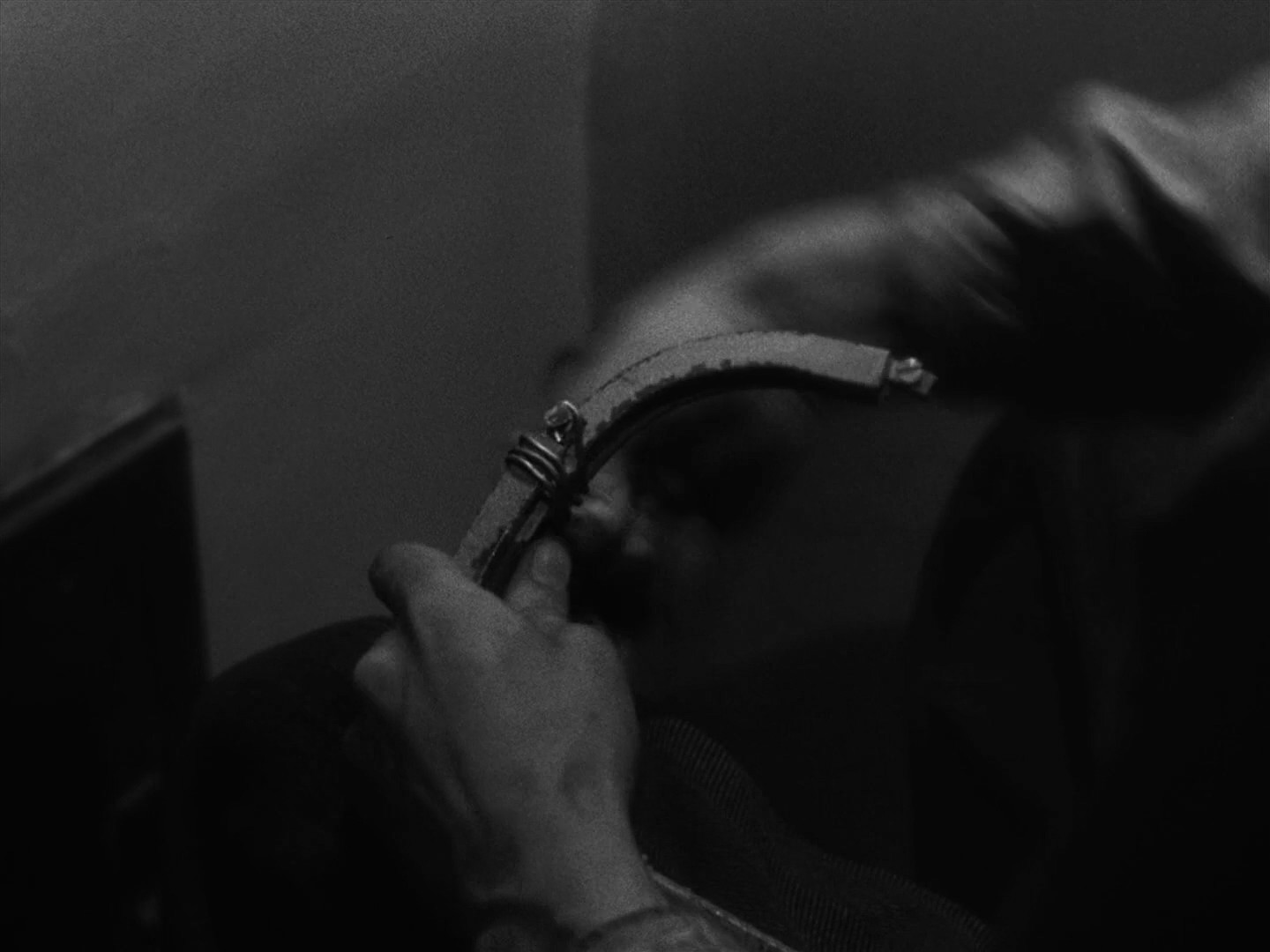
Alternatively "Un condamné à mort s'est échappé ou Le Vent souffle où il veut" which just rolls off the tongue. This is about the closest you will get to a "form purist" prison escape film, as the man's stay in the prison and his escape is 100% of the story. There are no character arcs, no real conflict, no splitting into two...only the man who escaped. The film is kind of a chore to get through, but it's one of a kind.
This is a simple story, as real stories often are. The tension that a prison escape film requires is there, but not quite as strong as our next entry.
The Hole (1960) by Jacques Becker
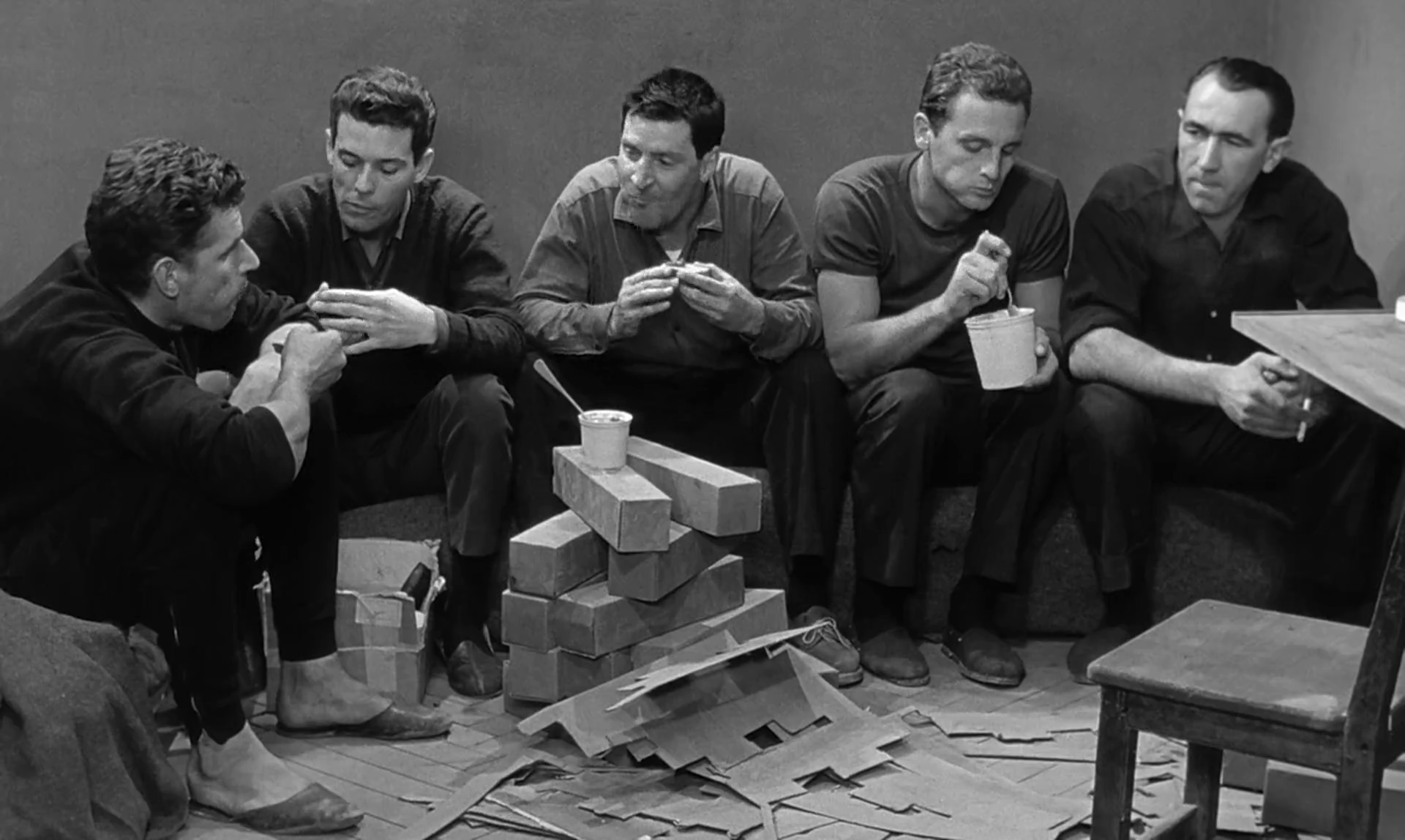
This is a largely unknown film, which is a crime worthy of Kur. Like the best prison escape stories, this too is based on real events. In fact, a person who once escaped the prison in question was initially hired as a subject matter expert only to be soon given one of the main roles. But what I absolutely adore about the Hole is the camaraderie between the five main characters, which is so rarely seen today. When I watch these prisoners collaborate and cover each others' backs, I absolutely cheer for them and want them to succeed.
The film also features an almost four minute single shot sequence where the actors break their way through the concrete floor of their cell. This was not faked - the actors actually did that. I love this scene for the tension it builds as the prisoners keep glancing at the door where guards will surely soon storm in to inspect the noise.
There are films which people recommend with an asterisk, yet this is a strong recommendation from me. The film is good, and it's weird it gets mentioned so rarely.
You may need to find this film by its French title, "Le Trou".
Escape from Pretoria (2020) featuring Daniel Radcliffe

This is another form purist prison escape film. For a story involving the apartheid and foreigners entering South Africa to join the protests, the plot does strangely little with the theme. Instead, the only reason we even establish any of that is to put the characters in prison where we can now focus completely on the escape itself.
And I love that! This film is based on real events, and from what I understand, adds next to nothing on top of that. What we see is (supposedly) exactly what happened in real life. The film's biggest strength is tension, and boy does it keep you on the edge of your seat. The escape plan is weirdly simple, mostly featuring the crafting of wooden replicas of the guards' keys, but that's how it happened in real life. The acting by Daniel Radcliffe is stellar as well.
Like the Hole, this is a must watch both as a prison escape story but also as a good film.
The Great Escape (1963)
Much like the Hole, this is one of those stories with jolly people who collaborate together and watch each others' backs. The film combines an excellent prison escape story, and the idea of war involving good people on both sides being forced to uncomfortable situations. This is probably the biggest scale of a prison escape I can think of, with tons of people working in military structure while the opposing side uses equal manpower to try to discover the plan. This is not the most typical prison escape story due to the characters already starting with a sense of trust to each other.
Am I the only one who always confuses Steve McQueen and Paul Newman?
Escape from Alcatraz (1979)

This is the film everyone recommends, and for a good reason. I don't know if there is much new I could say about this - it's a solid prison escape story, although the plot structure has some odd things such as the new characters being introduced near the end when the escape plan is already almost ready to go. However, supposedly that's what happened in real life, and the film makers decided not to change that.
Recommended, but you've already seen this.
Papillon (1973)
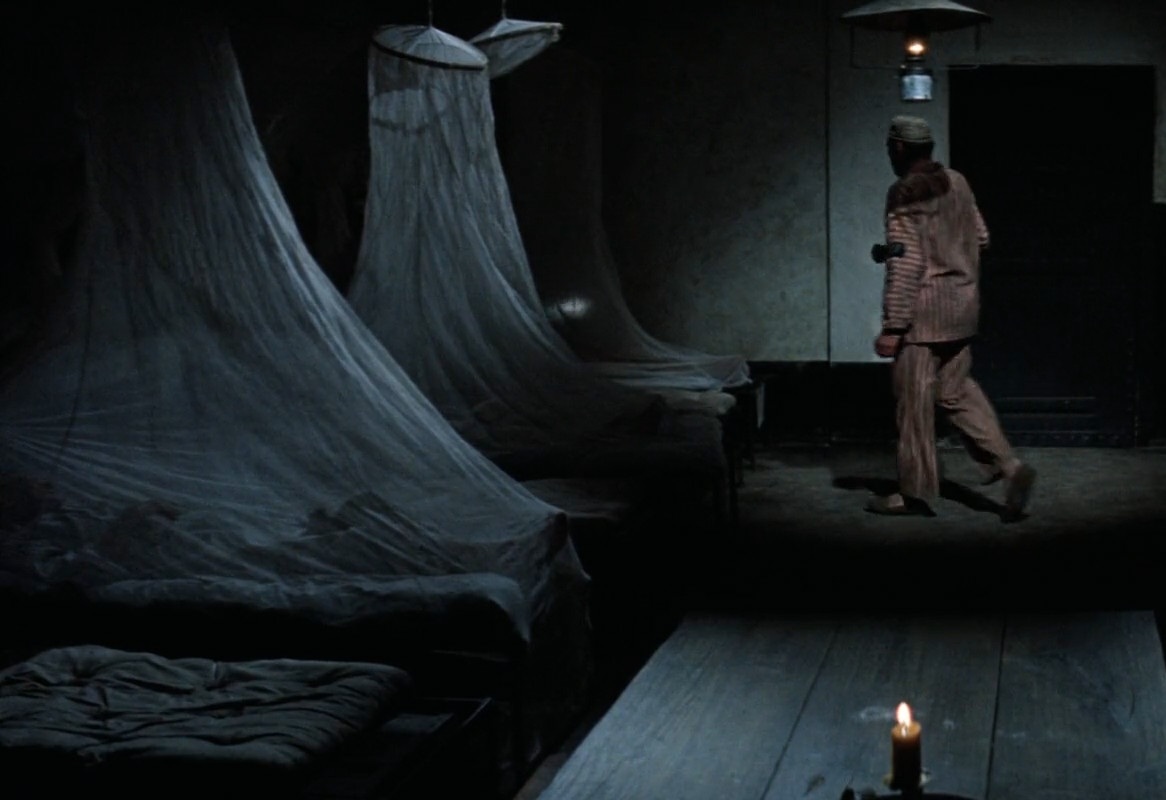
A contemporary critic wrote, "You know something has gone wrong when you want the hero to escape simply so that the movie can be over." I agree the film is on the slow side, but not that slow.
Papillon is an odd addition to this list as most of the action is not so much about escaping from prison but all the related things, especially what happens after the escape. Yet I cannot avoid the fact that this film features not one but three prison escapes, and they are all worth seeing. Papillon is a film that drags on, but is worthy of a study for its more realistic view on historical prison escapes. Yes, I've heard that the autobiography he wrote may be almost entirely fictious.
Wanderer's Journal 2 shares a lot with the type of imprisonment done in Papillon. The second island is so remote that it's sufficient to just toss people on the shore and they'll be incapable of escaping.
No, I haven't seen the remake.
Escape Plan (2013)

This is that recommendation with an asterisk.
If one hears of a film with the cast being Sylvester Stallone, Arnold Schwarzenegger, and 50 Cent, prison escape may not be the genre they first imagine. Yet this much troubled production is definitely a pure prison escape film and absolutely worth watching. The ending is awful and seems to be there mostly so the Governator can spray death and destruction via a mounted minigun wielded with nothing but the strength of his muscles, but the parts set in the prison itself are just fine. Yeah. It's fine.
The clever inversion of this film is that it combines a heist AND a prison escape into one. The whole point is that the main character intentionally gets to prisons to demonstrate how one might escape from them, which is a genius concept. The plot is all over the place, though, and this story has probably one of the weirdest antagonist I've seen to date. I still don't understand why the plot of this film even happened.
They also made two awful sequels which I refuse to watch.
Ear Hustle (podcast) by Earlonne Woods et al.

Stories are one thing, the reality another. This podcast by the inmates of San Quentin State Prison is an excellent view to the life inside even if there are only a few mentions of escapes. What most surprised me was the idea that many of the prisoners have been inside from before the invention of the internet and hadn't seen how the world has changed while they were incarcerated. The episodes that described the lives of those who were pardoned only to find out how much little of the world they new was left made me think of the character Brooks in Shawshank.
Bonus: Abashiri Prison
Did you know there's a Japanese prison film called Abahiri Prison? They also made 17 sequels in just 8 years. I haven't seen any of them. Watch them and let me know if I should!
Credits
The title image of this article is the Kakola prison in Turku, Finland from Wikipedia. This file is licensed under the Creative Commons Attribution-Share Alike 3.0 Unported, 2.5 Generic, 2.0 Generic and 1.0 Generic license.